Trezor Start – Full 1200-Word Beginner Guide (No Links)
Setting up a Trezor hardware wallet for the first time is one of the most important steps toward managing cryptocurrency securely. A hardware wallet provides offline protection, meaning your private keys stay isolated from online threats while still allowing you to interact with blockchain networks. This guide offers a complete, deeply detailed explanation of the Trezor start process, how device initialization works, common challenges users face, and essential security principles. Whether you’re opening a brand-new wallet or revisiting the setup steps for clarity, this walkthrough covers everything you need to know.
Introduction to Trezor Start
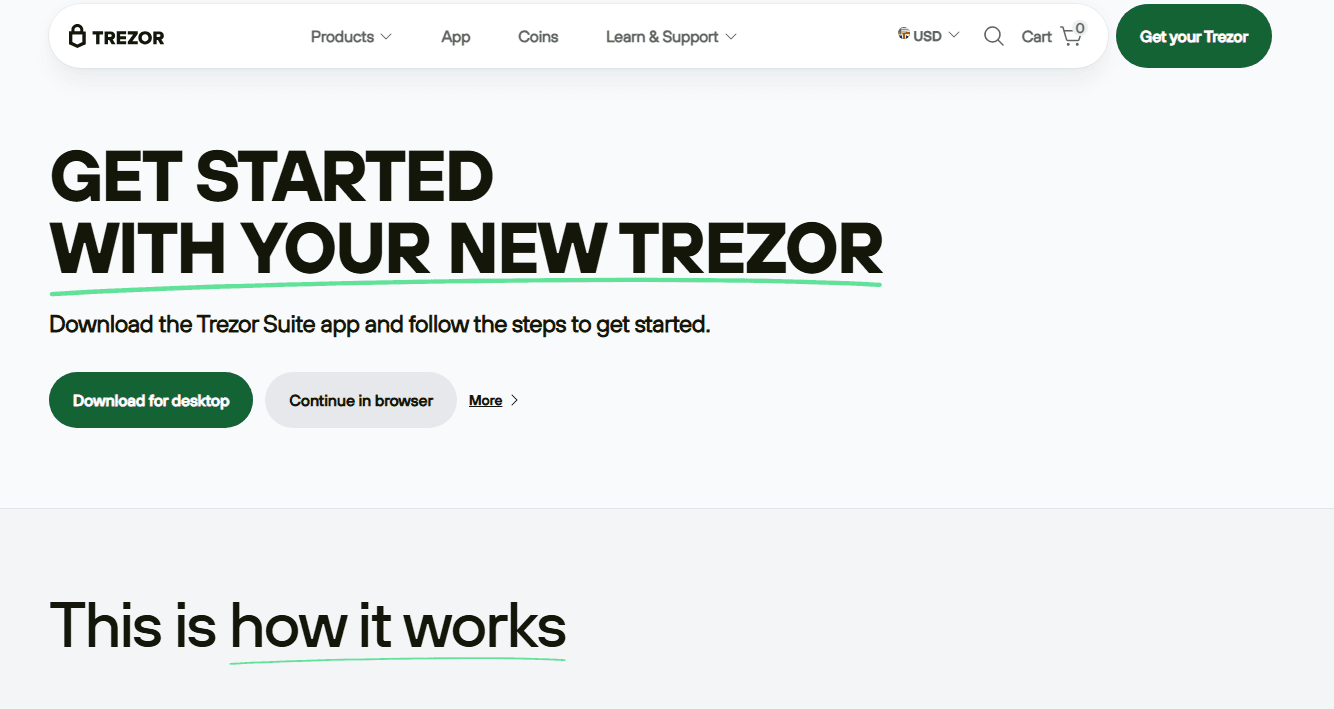
When people mention “Trezor Start,” they’re generally referring to the onboarding process for initializing a Trezor hardware wallet. Trezor devices act as secure signing tools that keep your private keys stored inside a protected hardware environment. They connect to your computer or mobile device through a companion application, where you create accounts, manage assets, and authorize transactions.
However, the actual security never leaves the hardware wallet. Trezor Start serves as your pathway into this ecosystem, ensuring you create a recovery phrase, establish a PIN, and learn the basics of managing your cryptocurrency safely.
Unboxing and Preparing Your Trezor Device
Your Trezor hardware wallet will typically come packaged with:
The hardware device
A USB cable
A set of recovery phrase sheets
A getting-started card
A few branded stickers
Before doing anything, inspect the device. Make sure the packaging is intact and the holographic seals, if included on your model, have not been tampered with. A hardware wallet must arrive in perfect condition to guarantee its security.
Once unboxed, connect the device to your computer using the supplied cable. The screen will activate and guide you to the next steps. The device itself does not come pre-initialized. You will create your security settings during the start process.
Installing the Trezor Companion Application
To interact with the hardware wallet, you need a compatible interface program. This application allows you to manage accounts, check balances, install coin firmware, and receive updates. While the app handles communication and interface functions, the private keys remain securely within the hardware wallet itself.
After installing and opening the application, the screen will prompt you to connect the device and begin setup. This is where the Trezor Start sequence begins.
Device Initialization and Firmware Installation
When setting up your device for the first time, you will be asked to install firmware. Hardware wallets are shipped without firmware to ensure maximum security. Installing firmware is your way of ensuring the device is genuine and uncompromised.
Once you confirm installation on both the app and the hardware wallet’s screen, the firmware loads onto the device. You may need to perform a reboot, after which the screen will ask whether you want to create a new wallet or recover an existing one.
Creating a New Wallet During Trezor Start
If you choose to create a new wallet, the device begins the process of generating your recovery phrase. This phrase is the root of your wallet’s security. It is a collection of words that serve as your ultimate backup, allowing you to restore your wallet on any compatible device if your hardware wallet is lost, reset, or damaged.
This phrase is never displayed on your computer—only on the Trezor screen itself. That ensures no malware on your computer can intercept the words.
Storing Your Recovery Phrase
The device will display a sequence of words one-by-one. You must write them down exactly as shown. This phrase gives full access to your cryptocurrency, so storing it requires careful thought.
Here are essential guidelines for safeguarding your recovery phrase:
Write the phrase on a physical medium, not on a digital device.
Do not take screenshots or save photos of the phrase.
Store it in an offline, protected, and private location.
Consider using fireproof or metal storage tools.
Trezor Start emphasizes that the recovery phrase is the most critical part of the entire setup. Losing it means losing access. Exposing it means losing control of your funds.
Creating a Secure PIN
Once the recovery phrase is written down and confirmed, the next step is to establish a PIN. This PIN protects your device from unauthorized use. Every time you connect your Trezor, you will enter this PIN on your computer using a scrambled keypad and confirm it on the device.
The PIN acts as the first line of defense if someone physically obtains your Trezor. Choose a PIN that is long, unpredictable, and not associated with birthdays or common combinations.
Exploring the Trezor Interface After Setup
After completing the initial steps, you will reach the main dashboard of your application. From here, you can:
Add cryptocurrency accounts
Receive funds
Verify addresses
Send transactions
Monitor your portfolio
Install additional coin firmware
Manage passphrases
Update device settings
Each crypto asset may require installing a corresponding module. Once installed, you can create accounts for that asset and receive your first transaction.
How Trezor Approves Transactions
A major function of a hardware wallet is securely approving transactions. When you initiate a transaction through the companion app, the Trezor device displays the details on its own screen. You must physically confirm the action using the device’s buttons.
This ensures:
Your private keys never leave the hardware
Malicious software cannot sign transactions without your approval
You verify the information directly on the secure device
Transaction approval is the core reason people use hardware wallets. Every action must go through the device itself.
Using a Passphrase for Extra Protection
Advanced users may choose to enable a passphrase. This feature creates an additional, hidden wallet that only appears when the correct passphrase is typed. Unlike the PIN, the passphrase must be entered every time.
A passphrase adds another layer of protection in case someone discovers your recovery phrase. However, if you forget your passphrase, the hidden wallet becomes inaccessible. It is a powerful, optional security tool suitable for users who understand its responsibility.
Common Issues During Trezor Start and How to Resolve Them
Device Not Recognized
Sometimes the computer may not detect the device. Causes may include:
Faulty USB cables
Unsupported browsers
Outdated software
Incorrect drivers
Switching cables or updating the app usually resolves the issue.
Incorrect PIN Attempts
Entering the wrong PIN repeatedly increases the device’s delay time. If all attempts are exhausted, the device resets itself. You can reconfigure it using your recovery phrase.
Firmware Loop or Update Errors
These can happen if:
The firmware installation was interrupted
USB communication was unstable
Reconnecting the device and reinstalling the firmware usually solves the issue.
Best Practices After Completing Trezor Start
Following the initial setup, maintaining good security habits ensures long-term protection of your crypto assets.
1. Keep Firmware Updated
Updates contain important security patches and compatibility improvements.
2. Protect Your Recovery Phrase
Never store it digitally and keep it in a secure, offline location.
3. Use Your PIN Consistently
A strong PIN protects your device from unauthorized use.
4. Only Use Trusted Computers
Avoid plugging your hardware wallet into public or unknown devices.
5. Double-Check Every Transaction
Always verify the address and amount on the device’s screen.
6. Consider a Passphrase for Sensitive Holdings
Advanced users can add an extra layer of wallet separation.
Why Trezor Start Is Designed to Be Simple Yet Extremely Secure
The entire process—initializing the device, generating a recovery phrase, setting a PIN, and confirming transactions—is built around one principle: your private keys stay offline and under your control.
Even if your computer is compromised, your crypto remains safe because:
Key generation happens only inside the hardware
Recovery phrase never appears on a computer screen
All signing requests require physical confirmation
This is the foundation of hardware-level crypto security.
Final Thoughts
Completing the Trezor Start process equips you with a secure and reliable foundation for managing digital assets. Once your wallet is initialized, you can explore account management, monitor your holdings, and approve transactions confidently, knowing that your private keys remain protected.